
Plan a Tidal Basin Cherry Blossom Visit Without the Stress
Every spring, the Tidal Basin becomes one of the busiest and prettiest spots in Washington, DC. The blooms look dreamy, but the crowds, weather, and walking can catch people off guard.
A little planning changes the whole day. If you’re a first-time visitor, a local, a couple, or a family with kids, the goal is simple: see the cherry blossoms without spending half the trip stuck in traffic or shuffling through packed paths.
Start with timing, then think about transit, walking distance, and what you’ll carry. That simple plan makes the visit feel a lot lighter.
Pick the right time for your Tidal Basin cherry blossom visit
Bloom timing shifts every year, so don’t pick a date based on old photos or last year’s trip reports. Instead, check the National Park Service bloom forecast before you go. That forecast gives you the best read on when the trees are moving toward peak.
Peak bloom usually gets all the attention, but it isn’t the only good time to visit. In many years, the full viewing window stretches a bit before and after peak. If you want more breathing room, that wider window matters.
Peak bloom gets the headlines, but pre-peak and post-peak days can make for a better visit.
Weekday mornings tend to be the easiest. Sunrise is even better if you want calm paths and soft light. Early evening can also be nice, although popular spots often stay busy until sunset.
Here is the simplest way to think about the bloom stages:
| Stage | What it looks like | Best for |
|---|---|---|
| Pre-peak | Buds mixed with open blossoms | Lighter crowds, early photos |
| Peak bloom | Trees look fullest and most dramatic | Classic blossom views |
| Post-peak | Petals fall, branches begin to thin | Romantic scenes, fewer people |
The best period can be short. Rain and wind can knock petals down fast, so stay flexible if the forecast changes.
Understand peak bloom, pre-peak, and post-peak days
Pre-peak days usually mean some trees are glowing while others are still opening. The Basin can still look beautiful, and the crowd level is often more manageable. If you care about comfort as much as photos, this is a smart sweet spot.
Peak bloom means about 70 percent of the blossoms are open. This is when the famous postcard look shows up. Paths feel tighter, though, and photo stops take patience.
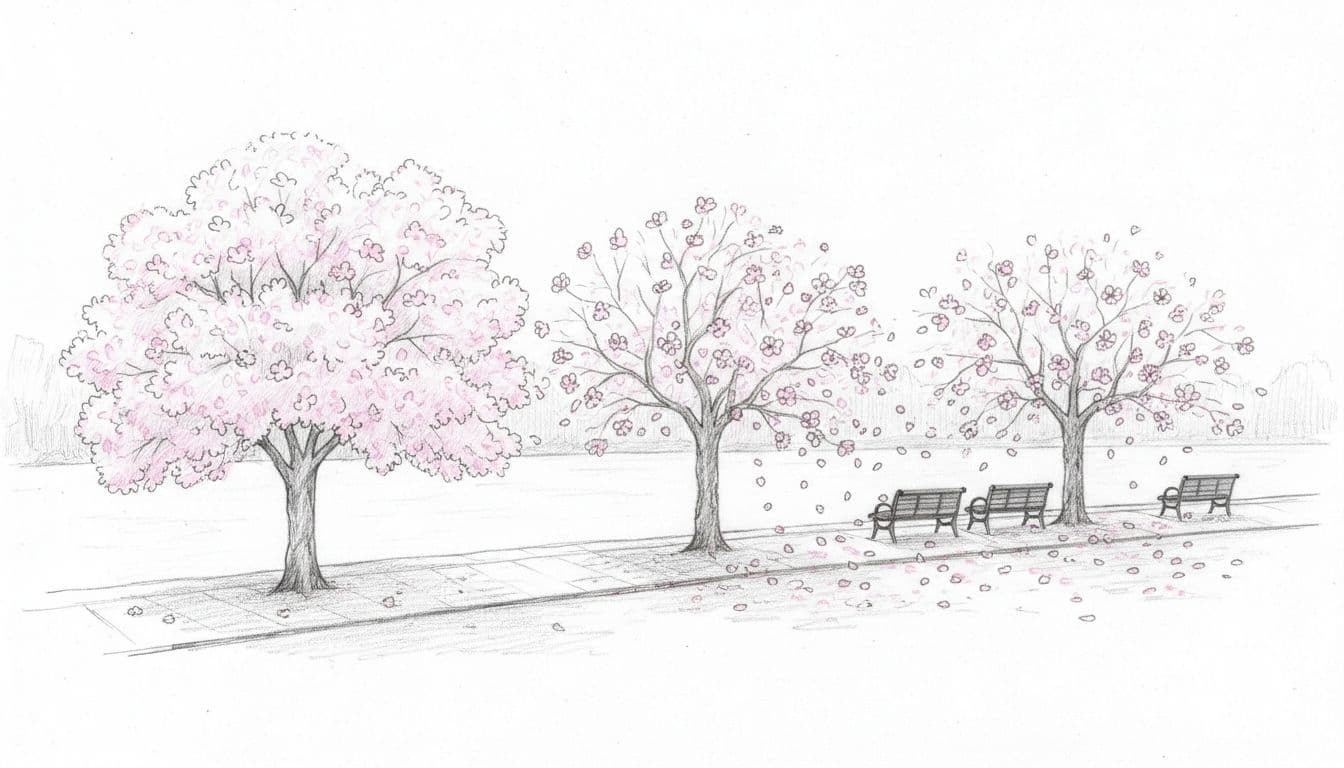
Post-peak has its own charm. Petals drift across the water and gather on the path like spring confetti. If you don’t need perfect full-canopy shots, post-peak can feel softer and less intense.
AI generated image.
Choose the best time of day for photos and fewer people
Morning is your best friend here. Light is gentler, temperatures are often cooler, and the paths are easier to walk. You’ll also spend less time waiting for a clear shot.
Sunset can be gorgeous across the water, especially near the Jefferson Memorial. Still, don’t expect quiet unless you’re visiting on a less busy day. If you want the easiest experience, go early and treat the extra sleep like the price of admission.
Plan how you’ll get there before the crowds hit
Driving to the Tidal Basin during cherry blossom season can feel like bringing a beach chair to a packed concert. You might get there, but you’ll work too hard for the spot. Parking is limited, roads can close, and event traffic gets heavy during the National Cherry Blossom Festival period.
For most visitors, Metro is the easiest choice. Walking in from a station also gives you more control over your route. That matters when sidewalks start filling up.
Smithsonian is a common stop if you want to approach from the National Mall side. L’Enfant Plaza works well for several routes and transfer options. Foggy Bottom can also make sense, especially if you want a longer walk past other landmarks. The best stop depends on where you want to begin and end, so map the route before you leave.

AI generated image.
Best Metro stops and walking routes to the Tidal Basin
If you want a direct-feeling walk, many people choose Smithsonian or L’Enfant Plaza. From either one, you’re still walking a bit, so wear shoes that can handle more than a quick stroll.
Foggy Bottom can be useful if you’re pairing the Basin with the western end of the Mall or nearby food stops later. Because station exits and street routes vary, check your map before you go underground. That small step saves a lot of standing around once you surface.
What to know about parking, rideshare, and bike options
Parking near the Basin is often more trouble than it’s worth, especially on weekends. If you must drive, expect a longer walk from wherever you finally find a legal space.
Rideshare can work, but don’t aim for the most crowded choke points. Pick a safe, legal drop-off a little farther out, then walk in. That short extra walk often saves time.
Biking is another solid option. Capital Bikeshare can be useful if you’re comfortable riding in city traffic and docking a bike a bit away from the busiest paths. Scooters may also be around, where local rules allow, but crowded pedestrian areas are not the place to weave through people.
Map out your cherry blossom walk around the Tidal Basin
The Tidal Basin loop looks simple on a map, but it feels longer when you’re stopping for photos, dodging crowds, and walking with kids. A loose route helps. You don’t need a military-level plan, only a good starting point and realistic expectations.
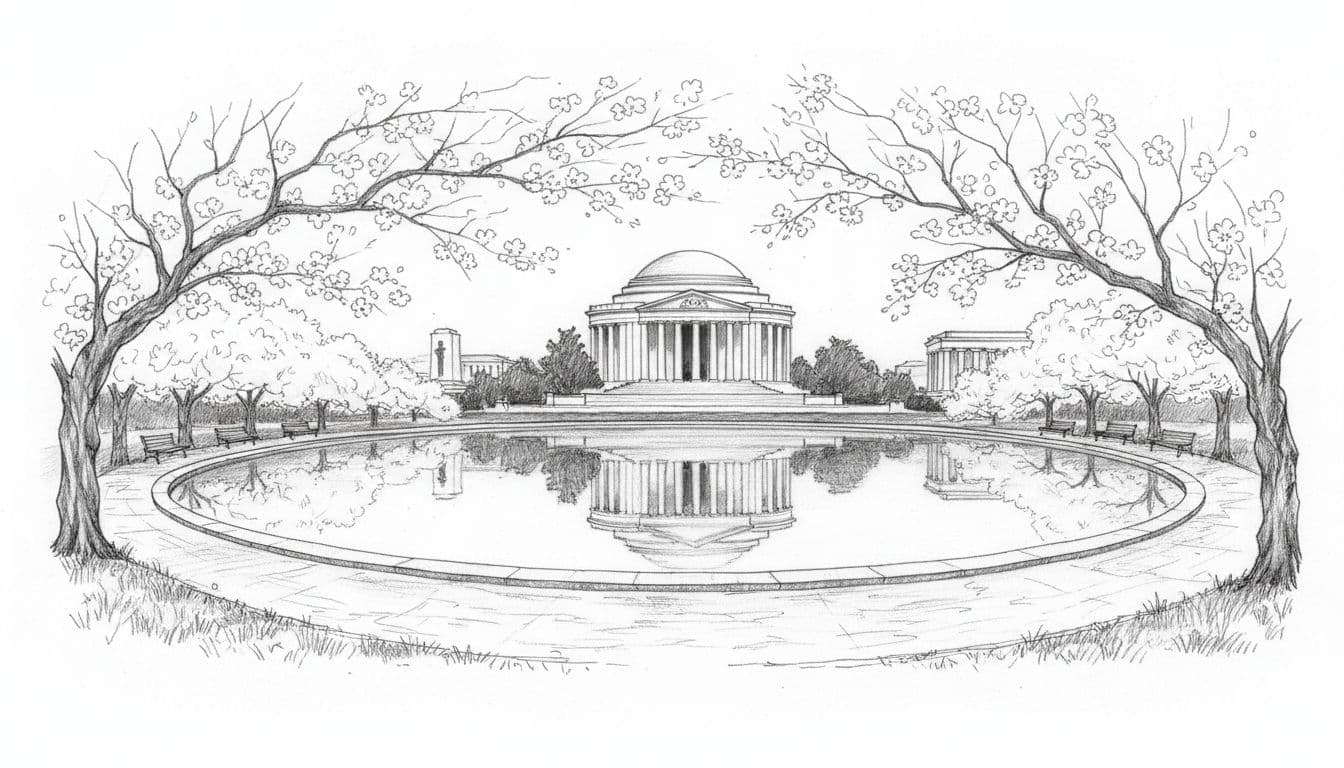
The classic views sit near the Jefferson Memorial, where blossoms frame the dome across the water. The Martin Luther King, Jr. Memorial area also gives strong photo angles, especially when the trees reflect on the Basin. On the Franklin Delano Roosevelt Memorial side, the path can feel a bit more spread out in places, which helps when the main hotspots get packed.
AI generated image.
Across the water, you can often get wide views that feel calmer than the busiest tree tunnels. Those open sight lines are great when you want the blossoms and the city backdrop in one frame.
Top spots for blossom views, photos, and classic DC backdrops
Near the Jefferson Memorial, expect the most famous shots and the most foot traffic. If you stop there, keep your photo break short and move along once you get what you need.
The MLK area gives a different mood, with strong lines from the memorial and softer trees nearby. Meanwhile, the FDR side can reward patient walkers who don’t mind covering more ground. In each area, the trick is the same: pause, take the shot, then keep moving.
How long the loop takes and what the walk feels like
A full loop with casual photo stops often takes 60 to 90 minutes. If you’re moving slowly, visiting with kids, or waiting for photos, it can stretch closer to two hours.
Crowds change the feel of the walk. Some stretches move easily, while others bunch up fast. Parts of the path may be uneven, and not every step feels smooth when it’s busy. Comfortable shoes make a bigger difference than most people expect.
Pack smart and follow simple etiquette for a better day
Spring in DC can flip on you. A cool morning can turn warm by lunch, and a mild forecast can still bring wind or light rain. Because of that, packing light but smart is the move.
Bring what helps you stay comfortable for a couple of hours outdoors. You don’t need a huge bag, only a few basics:
- Comfortable shoes for steady walking on crowded paths
- Layers so you can adjust as the temperature shifts
- Water and a snack if you’re traveling with kids or waiting in lines
- Sunscreen for bright days by the water
- A portable charger because photos drain batteries fast
- A light rain jacket if the weather looks shaky
Your phone camera may be all you need. Good light and a calm moment matter more than fancy gear.
What to bring for comfort, weather, and better photos
If you’re visiting early, a light jacket helps. By midday, you may want to tie it around your waist. That swing is common in March and early spring.
Water matters more than people think, especially on warm afternoons. Restrooms and food options aren’t always right where you want them, so don’t start the walk empty-handed. Also, charge your phone before you leave. Low battery at the best view is a bad trade.
Cherry blossom etiquette that helps everyone enjoy the trees
The blossoms are delicate, and the area gets heavy use. Don’t pull branches down for photos. Don’t climb trees, step into planted areas, or block the full path while posing.
Patience goes a long way here. Take your photo, then let the next group step in. If everyone treats the space like a shared park instead of a private set, the whole visit feels better.
Turn your blossom trip into a full DC day
Once you’ve made the trip, it makes sense to keep the day going. The Tidal Basin sits close to some of DC’s easiest add-on stops, so you can build a relaxed half-day or full-day plan around it.
After your walk, you might head toward the National Mall, nearby memorials, or a museum. If paddle boats are running for the season, that can be a fun change of pace. Families often like mixing blossom time with one indoor stop, especially if the weather turns.
Nearby things to do after the Tidal Basin
The National Mall is the obvious next step, and for good reason. You can keep walking, slow the pace at a memorial, or duck into a museum when your feet need a break.
Couples may want to linger by the water or keep strolling for more views. Families often do better with a simple reward built in, like lunch and a place to sit. A blossom day is more fun when you don’t push it too hard.
Where to eat after a long walk around the blossoms
By the end of the loop, most people want something easy, filling, and low-stress. That’s even more true if you’re with kids, meeting friends, or trying to avoid another long wait.
For DC and Maryland area visitors, Ledo Pizza is a solid post-walk option. Square pizza is easy to share, and the menu also gives you salads, subs, and other group-friendly picks. Instead of hunting for a complicated meal after a crowded morning, you can keep the day simple and sit down somewhere that works for different appetites.
The best cherry blossom trips aren’t the ones with perfect timing or perfect photos. They’re the ones where you check the bloom forecast, arrive early, use transit, wear good shoes, and stay flexible when the crowds or weather shift.
The Tidal Basin is still worth the effort. With a little planning, the day feels less like a scramble and more like spring should feel, bright, easy, and worth remembering.
If you’re picking a date now, make your plan today and give yourself room to adjust. That’s the smartest way to catch the blossoms at their best.